XR and preservation
From Daydream to interoperable XR
The hardware and software landscape has changed since the original mobile-headset installation. Its preservation now includes the interaction as well as the images.
SEAing Breath archive editorial2 min read
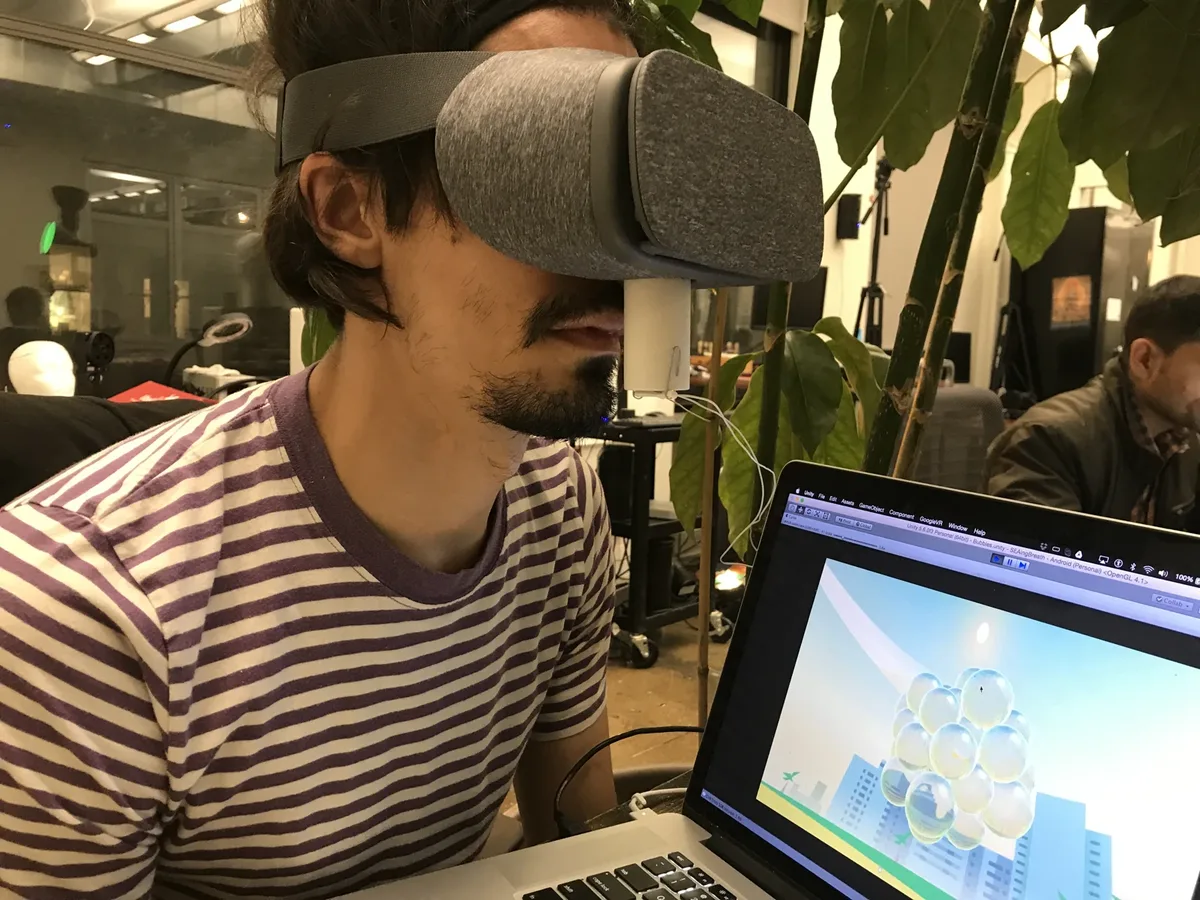
An apparatus belongs to its moment
The 2017 SEAing Breath setup joined a mobile VR headset, a breath sensor and a responsive virtual environment. The archive also documents an early headset-mounted airflow experiment, a swim-belt arrangement and the material details of a public installation. Those objects show how the work was experienced in its time.
Google now states that Daydream VR software receives no further software or security updates and may have compatibility problems on Android 11 or later. A historical headset can therefore become a preservation question as the surrounding software changes. [1]
Interfaces shared across devices
Khronos released OpenXR 1.0 in July 2019. OpenXR 1.1 followed in April 2024, bringing widely used extensions into the core standard to reduce fragmentation across XR platforms. OpenXR concerns the interface between an application and an XR runtime. Its development reflects an effort to make software easier to support across compatible systems. [2][3]
WebXR addresses immersive experiences through the web platform. The W3C WebXR Device API publication dated 29 October 2026 is a Candidate Recommendation Draft. It describes browser access to VR and AR devices and their sensors. The draft’s status is part of its meaning, and actual support depends on the browser and device involved. [4]
Preserving a relationship
For SEAing Breath, preservation reaches beyond storing an underwater scene. It includes how breathing was sensed, how the signal affected movement and sea level, how the apparatus was fitted, and how a person entered and left the experience. The setup film and prototype records help preserve that relationship.
A contemporary reconstruction would need the relevant source code and assets, a documented mapping between sensor and scene, compatible hardware, and tests of the visitor experience. It would also need a presentation plan describing how the reconstruction relates to the historical work.
The website currently offers the archive, films and a clearly labelled browser illustration of the feedback loop. These materials make the original interaction legible while preserving a trail to the records of its creation. They also provide a foundation for future conversations about conserving an artwork whose medium includes a changing technological system.
Sources
- 1.
- 2.
Khronos · 29 July 2019
Khronos Releases OpenXR 1.0 ↗ - 3.
Khronos · 15 April 2024
Khronos Releases OpenXR 1.1 ↗ - 4.
W3C · 29 October 2026
WebXR Device API, Candidate Recommendation Draft ↗